Greyton Conservation Society Conservation | Restoration | Integration
Late light over the rolling veld and mountains outside Greyton.

News and notices

What is happening around Greyton

Announcements from the society, work in progress on the reserve, and notes from the committees.

Latest

Recent news

Video

Introducing the ranger team

The team filmed a ninety second introduction in the reserve. Meet the people you will pass on the mountain, and turn the sound on.

Watch the video
Reserve

Reserve extension approved by the stewardship panel

The proposed extension to the Greyton Nature Reserve has been approved by the CapeNature stewardship panel. Several steps remain before final approval.

The reserve
Funding

Sophia Foundation matches local giving Rand for Rand

The Sophia Foundation supports the Greyton Nature Programme by matching community donations and fundraising up to R500 000 a year.

Contribute
First Sundays

The alien hack meets on the first Sunday of every month

Two hours of clearing in a prioritised area, followed by tea and a treat. Everyone is welcome and no experience is needed.

The hack

Friday Flower

A fynbos species, most Fridays.

The society posts a Friday Flower on its social media: one species from the veld around Greyton, photographed up close. The photographs from these posts are in the gallery.
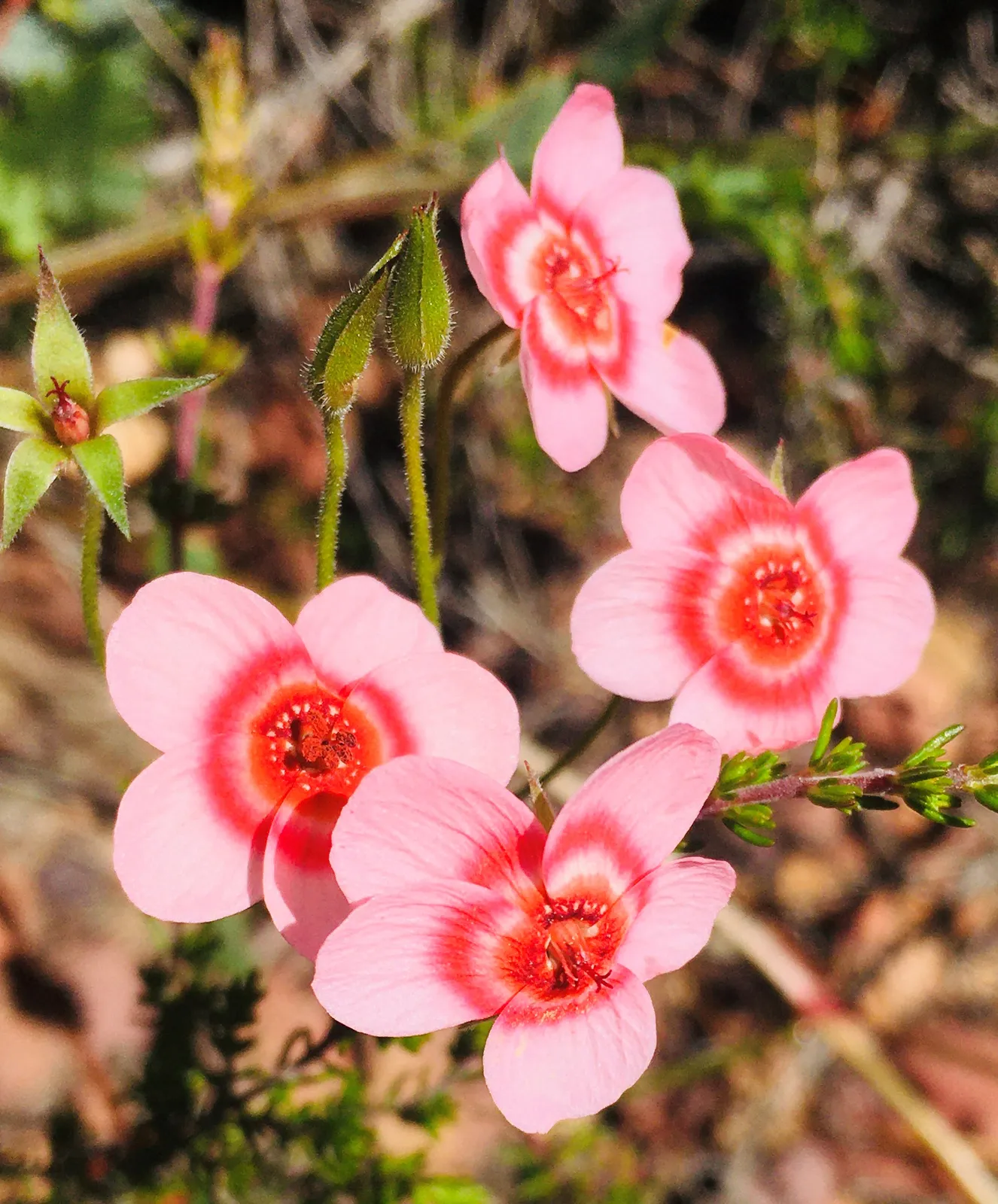
Pelargonium incarnatum in flower.

26 January 2024

When is a Geranium not a Geranium? When it is a “Pelargonium”!

Geraniums have five petals of the same size, but the plant discovered by Paul Hermann at the base of Table Mountain in the Cape in the 17th Century had two larger petals at the top and three smaller petals at the bottom. Although it belonged to the same plant family (Geraniaceae), it was not a Geranium. It was given the name “Pelargonium”. Out of the 300 spp of Geranium found in the temperate and montane tropics, there are only four true Geranium in the Fynbos with Geranium incanum (Amarabossie) found growing in sandy and stony soils along the Cape coast.
Friday Flower, 26 January 2024

When is a Geranium not a Geranium? When it is a “Pelargonium”!

Geraniums have five petals of the same size, but the plant discovered by Paul Hermann at the base of Table Mountain in the Cape in the 17th Century had two larger petals at the top and three smaller petals at the bottom. Although it belonged to the same plant family (Geraniaceae), it was not a Geranium. It was given the name “Pelargonium”. Out of the 300 spp of Geranium found in the temperate and montane tropics, there are only four true Geranium in the Fynbos with Geranium incanum (Amarabossie) found growing in sandy and stony soils along the Cape coast.

There are 270+- Pelargoniums in southern Africa, +-150 in the Fynbos. They are either “shrubs” or “geophytes”, the latter with large underground tubers. Their flowers are unique with nectar guides on the upper petals. There are several pollinators including: bees, bumblebees, bee flies, long-tongued flies and moths and birds. The word “pelargos” refers to a stork, the fruit of the plant resembling the beak of a stork. They have unique seeds that drill into the soil.

After introduction to Europe and hybridisation, the Pelargoniums became a hugely popular garden species. To this day new varieties and colours are developed every year. You do not have to buy Pelargoniums in Greyton, just go for a stroll in the mountains and hills!

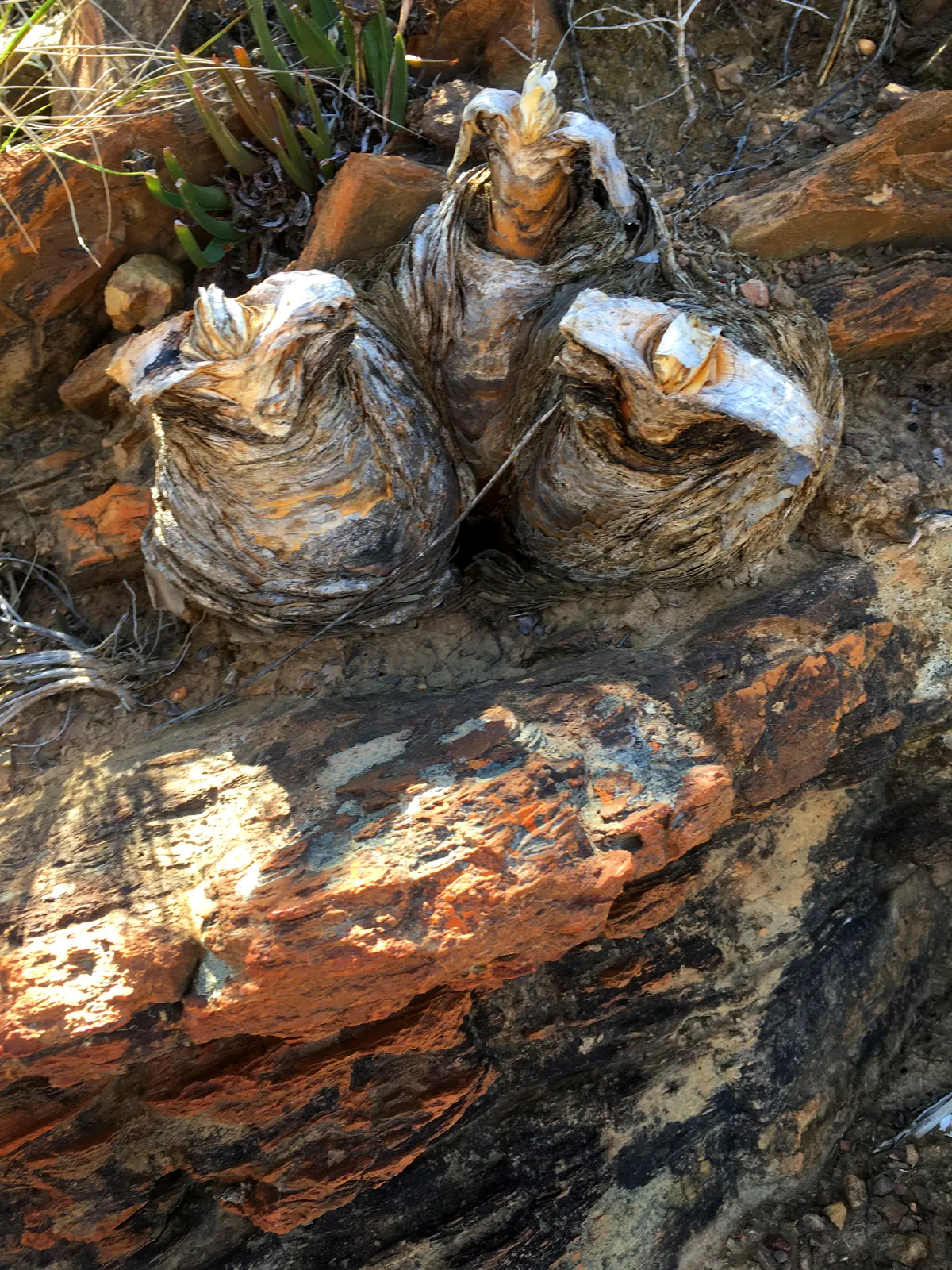
Boophone disticha bulbs among the rocks.

2 February 2024

Boophone disticha – the Ox Killer, sore-eye flower, Gifbol, kxutsana-yanaha!

Within the Amaryllidaceae Family, the genus Boophone forms long-lived partly exposed bulbs with an interesting botanical story. Boophone disticha is widely distributed in all provinces of South Africa and into tropical Africa.They are prehistoric.
Friday Flower, 2 February 2024

Boophone disticha – the Ox Killer, sore-eye flower, Gifbol, kxutsana-yanaha!

Within the Amaryllidaceae Family, the genus Boophone forms long-lived partly exposed bulbs with an interesting botanical story. Boophone disticha is widely distributed in all provinces of South Africa and into tropical Africa.They are prehistoric.

Look carefully to find them hidden amongst the rocks and sandstone slopes, especially in the Renosterveld around Greyton. Boophone refers to bous or ox, phonos means murder or slaughter. This alludes to the poison in the bulb that can allegedly kill an ox!

The bulbs are much used in traditional medicine and the Khoisan used the plant to poison arrowheads. Touching the flowers and rubbing your eye can cause inflammation and irritation. This magical bulb produces two surprises during its growth phases, proving that out of a plain, innocuous bulb, rock like, comes some botanical magic!

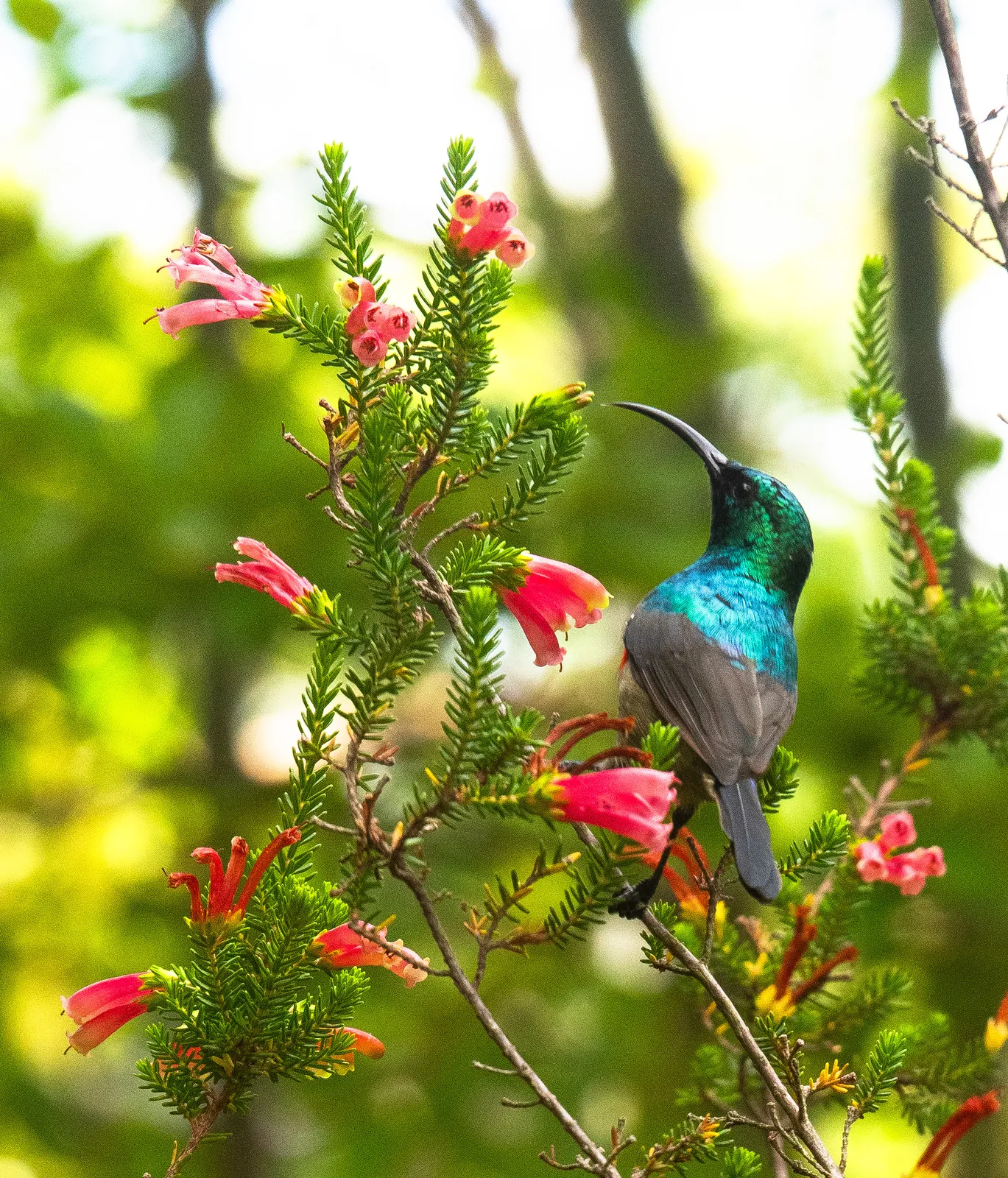
An orange-breasted sunbird on Erica discolor.

16 February 2024

The Ericaceae, a champion of the Fynbos - Erica’s with tubular flowers.

The Erica family is the largest genus in the fynbos, accounting for over 7% of all fynbos species. Though found throughout Africa, Madagascar and Europe 80% of the species (660 spp of about 860 spp) are confined to southern Africa.
Friday Flower, 16 February 2024

The Ericaceae, a champion of the Fynbos - Erica’s with tubular flowers.

The Erica family is the largest genus in the fynbos, accounting for over 7% of all fynbos species. Though found throughout Africa, Madagascar and Europe 80% of the species (660 spp of about 860 spp) are confined to southern Africa.

Their leaves are often needle like with margins rolled under or “ericoid”. The flowers are variously colored, cup or egg shaped, urn-like to tubular, either having short or long petals.

The tubular flowered are very different from those erica with variously shaped short petals. The Erica or Heath family has been largely responsible for bringing attention to the fynbos due to their large numbers, small leaves “fyn” and beautiful flowers.

They are tough plants, not very palatable to wild animals or livestock. This post details a selection of erica with tubular flowers pollinated by birds such sunbirds and inhabited by lurking crab spiders.

Ericas grows on flats and rocky slopes/outcrops with sandstone or quartz elements. The tubular flowered Erica are easier to identify than the urn like, cup or egg-shaped flowers seen on erect shrublets. The tubular flowered Erica are often seen as stiff, erect shrubs (up to 1.5-2 m) with distinctive, colourful flowers.

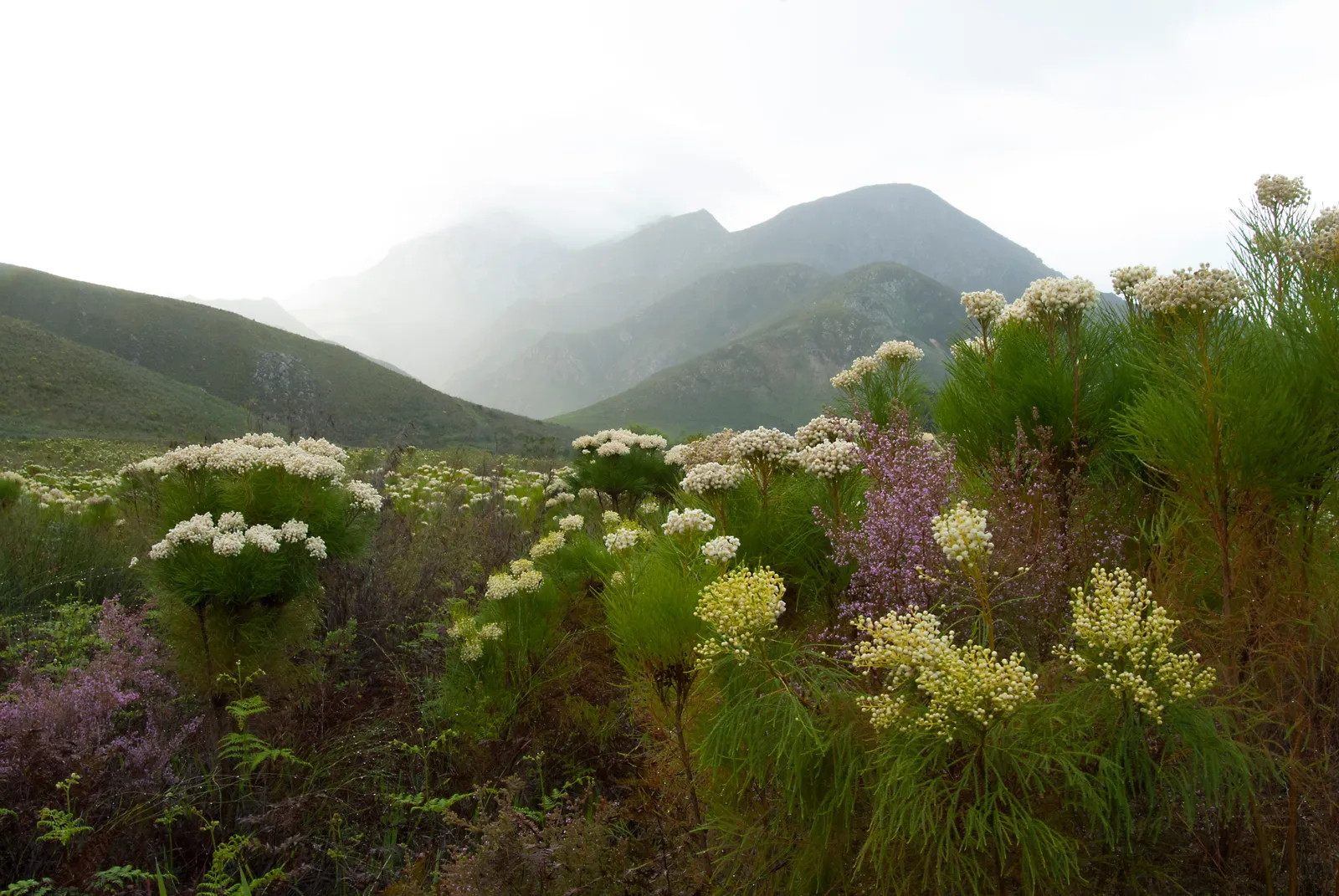
Brunia and erica with the mountains behind.

24 February 2024

The Ericaceae, champion of the Fynbos

The Erica Family is the largest genus in the Fynbos. With 660 spp of Erica in the Fynbos/transitional Renosterveld, identifying specific Erica plants is a challenge especially when they are shrublet sized. Erica’s with a heath like appearance, are usually compact shrubs (30-60 cm) bearing small to narrowly cupped, urn or egg- shaped flowers often waxy pink, purple, mauve or white. They can occur in large numbers on flats and rocky slopes near Greyton, sometimes painting hill and mountainsides pink. The heath like appearance is reminiscent of the Scottish-Highlands.

Friday Flower, 24 February 2024

The Ericaceae, champion of the Fynbos

The Erica Family is the largest genus in the Fynbos. With 660 spp of Erica in the Fynbos/transitional Renosterveld, identifying specific Erica plants is a challenge especially when they are shrublet sized. Erica’s with a heath like appearance, are usually compact shrubs (30-60 cm) bearing small to narrowly cupped, urn or egg- shaped flowers often waxy pink, purple, mauve or white. They can occur in large numbers on flats and rocky slopes near Greyton, sometimes painting hill and mountainsides pink. The heath like appearance is reminiscent of the Scottish-Highlands.

Day to day

Follow the reserve team

The rangers post photographs from wherever they are working, most days of the week. It is the quickest way to see what is happening on the mountain.

Membership

Members hear about this first.